How To Choose A Solar Battery
The factors that matter most when choosing a home battery , usable capacity, power, backup, phase, chemistry, warranty and VPP readiness , explained in plain English.
Choosing a home battery is about matching the system to how your household actually uses energy , not buying the biggest number you can afford. Two homes with identical power bills can need very different systems depending on when they use energy, whether they want backup, and how their switchboard is wired. Here are the seven factors that decide it, what each one means in practice, and the sizing mistake that costs Australian households the most money.
1. Usable capacity (kWh)
Capacity is how much energy the battery stores. Always compare on usable capacity, not the nameplate figure , the usable figure is what you can actually draw after the depth-of-discharge (DoD) limit. A battery advertised at 10 kWh nominal with 90% DoD gives you 9 kWh; one rated 100% DoD gives you the full 10 kWh. New to the units? See kW vs kWh explained.
How to size it from your own bill
The practical method takes five minutes. Find your average daily consumption in kWh on your electricity bill, then work out how much of that lands after sunset , for most Australian households it is roughly 50–60% of the daily total, covering cooking, heating or cooling, hot water and lighting. That evening-and-overnight figure is what a battery needs to carry. A home using 20 kWh a day typically wants somewhere around 10–13 kWh of usable storage to get through the night on stored solar.
Then sanity-check it against your solar. A battery can only store surplus you actually generate , if your system exports 6 kWh on an average day, a 20 kWh battery will sit half empty most of the year. Sizing storage beyond your daily surplus buys capacity that never fills.
The rebate band that changes the answer
The federal Cheaper Home Batteries discount is not a flat rate per kWh. It pays on marginal bands: your first 14 kWh of usable capacity earns the full rate (roughly $250–$270 per kWh), capacity between 14 and 28 kWh earns only 60% of it (about $150–$163 per kWh), and anything above 28 kWh earns just 15%.
That makes the first 14 kWh of usable capacity by far the best value in any quote, and it means jumping from a 13 kWh system to an 18 kWh one costs you more per kWh than the first tranche did. Unless you have a specific reason to go large , an all-electric home, an EV charged overnight, or serious backup requirements , the economics favour sizing near the top of the first band. Full workings are on our battery rebate page.
One more reason not to over-buy up front: most quality systems are modular. Starting with a sensible stack and adding modules later as your usage grows (an EV, a pool, moving off gas) is usually smarter than paying today for capacity you will not use for three years.
2. Power output (kW)
Power is how much the battery can deliver at any instant, and it is the spec most often overlooked. Capacity decides how long you last; power decides what you can run at once. Check two numbers: continuous output (what it sustains all day) and peak or surge output (a short burst, needed for motors starting up , air conditioners, pool pumps and fridges all draw several times their running current at start-up).
To judge whether a rating is enough, add up what genuinely runs together in your house on a summer evening. As a rough guide: a ducted air conditioner draws 3–5 kW, a split system 1–2 kW, an induction cooktop 2–3 kW in normal use (up to 7 kW with all zones going), an electric hot water element around 3.6 kW, an oven 2–3 kW, a pool pump 0.75–2 kW, and a home EV charger 7 kW.
A 5 kW single-phase battery covers an average home comfortably. It does not cover an all-electric household cooking dinner while the ducted system runs and the car charges , that is where the system either trips or quietly pulls the shortfall from the grid, and you never get the bill you were promised.
3. Single-phase or three-phase
The battery must match your supply. Most Australian homes are single-phase; larger, newer or all-electric homes are often three-phase. You can check your own: open the switchboard and look at the main switch , a single wide breaker feeding one active wire is single-phase, three linked breakers is three-phase. See single-phase vs three-phase power for the detail.
If you are three-phase, there is a trap worth knowing. Not every three-phase battery backs up all three phases in an outage , some back up one phase only, so whichever circuits happen to sit on the other two stay dark. Ask specifically whether the system supports whole-home backup across all three phases and whether it handles unbalanced loads, which is what happens in a real house where the phases never draw evenly.
4. Backup capability
If outages matter to you, three things decide whether backup actually works the way you pictured.
- Scope , whole-home backup versus a few essential circuits. Essential-circuit backup is cheaper and often sensible, but the circuits are chosen and wired at installation, so decide up front what must stay live: fridge, internet, lighting, medical equipment, and in many Queensland and NSW homes, at least one air conditioner.
- Switchover time , how long the house is dark before the battery takes over. Systems that change over in under about 4 ms are fast enough that computers, routers and sensitive equipment never notice. Slower changeover still restores power, but anything unprotected reboots.
- Solar during an outage , this one surprises people. In a blackout, many systems shut the solar down for safety and run the house on stored energy alone, so a multi-day outage drains the battery and stays drained. If you want the panels to keep recharging the battery while the grid is down, the system needs to support it and it must be configured that way at install.
5. Battery chemistry and safety
Almost all quality home batteries sold in Australia now use LFP (lithium iron phosphate, LiFePO₄) chemistry, and that is what you want. LFP runs cooler and is far more thermally stable than the older NMC chemistry, tolerates being kept at high state of charge, and delivers much longer cycle life , the systems Sunbridge installs are rated between roughly 6,000 and 10,000 cycles, which at about one cycle a day is well over two decades of daily use.
On safety and compliance, check that the battery and inverter are on the Clean Energy Council approved products list (required for the federal discount), and that installation follows AS/NZS 5139, the Australian standard governing where a battery may be located. If the unit will live outside, it needs an IP65 or IP66 rating and an operating temperature range that suits your climate , worth checking properly in Queensland, where a west-facing wall in February is a harsher environment than any spec sheet photo suggests.
6. Warranty
A battery warranty has three dimensions, and a headline "10-year warranty" tells you only one of them. Compare all three:
- Term , the years covered. Ten years is now the market standard for quality systems.
- Energy throughput , a cap on total energy cycled through the battery, usually in MWh. Whichever comes first, years or throughput, ends the warranty. This matters more than it looks if you plan heavy daily cycling or a VPP.
- Retained capacity , the percentage of original capacity guaranteed at the end of the term, commonly around 70%. A battery warranted to 70% at ten years is a materially better product than one warranted to 60%.
Also ask who actually honours it. A warranty is only as good as the entity behind it , check there is an Australian presence to claim against, and that your rights under Australian Consumer Law sit alongside the manufacturer's terms rather than being replaced by them.
7. VPP readiness
A Virtual Power Plant (VPP) pools thousands of home batteries so the operator can draw on them at peak times, paying you for the energy or a signing credit. It is worth understanding for two reasons: the payments are real, and in New South Wales the PDRS incentive of up to $1,500 requires connecting to one.
The trade-off is control. In a VPP the operator can discharge your battery at times you did not choose, which means more cycles (relevant to the throughput cap above) and occasionally a lower state of charge than you would have picked going into the evening. Good programs cap how much they take and let you reserve a backup minimum. Check whether the battery is VPP-capable, which programs it is approved for, and what the exit terms are , and see how tariffs interact in time-of-use vs flat-rate plans.
The systems Sunbridge installs, side by side
All CEC-approved and LFP. Capacity figures are the scalable range across module configurations , the right configuration for your home comes out of the bill and usage analysis, not the top of the range.
| System | Supply | Capacity range | Notable |
|---|---|---|---|
| GoodWe ESA Series | Single or three-phase | Up to 108 kWh | All-in-one pre-wired unit, backup under 4 ms, IP66 |
| Sigenergy SigenStor | Single or three-phase | 5 – 48 kWh | 100% DoD, 10,000 cycles, 2.5–24 kW, optional DC EV charging |
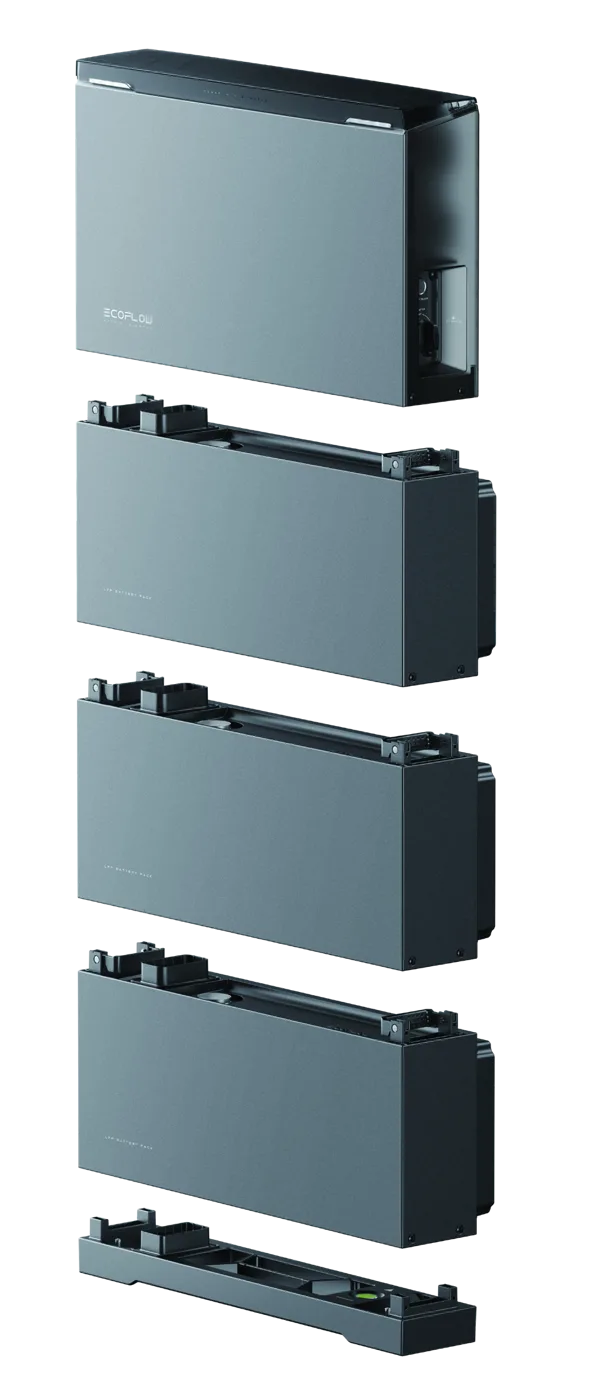
| EcoFlow OCEAN 2 | Single or three-phase | Up to 96 kWh | 100% DoD, 10,000+ cycle life |
| Bluetti EP760 / EP2000 | Single (EP760) / three-phase (EP2000) | EP2000 to 154.8 kWh | 7.6 kW single-phase backup; EP2000 for large three-phase homes |
| ESY SUNHOME HM5 / HM20 | Single (HM5) / three-phase (HM20) | 5.12 – 94.86 kWh | 5 kW and 20 kW inverter options, IP66 |
| SolaX Triple Power | Single or three-phase | 10.2 – 66.5 kWh | 100% DoD, 6,000+ cycles |
Four mistakes worth avoiding
- Buying capacity you cannot fill. Storage beyond your average daily solar surplus sits idle, and past 14 kWh usable it also earns a reduced rate of federal discount.
- Comparing nominal instead of usable kWh. Two batteries advertised at the same number can differ by 10% or more in what you can actually draw.
- Treating backup as automatic. Scope, switchover speed and whether solar keeps running are all decided at installation, not by the brand on the box.
- Reading only the warranty years. Throughput and retained-capacity terms are where warranties genuinely differ.
Compare systems
Browse all home battery systems, or check what the federal discount and your state incentive are worth at your address on our rebate page. Sunbridge analyses your bills and usage patterns and recommends a configuration sized to them , including which capacity band actually makes sense for your household.
Thinking about solar, a battery or an EV charger?
Get a tailored quote , we'll design the system around your home, usage and rebates.