Your solar produces power
Rooftop panels generate electricity during daylight hours for the property to use.

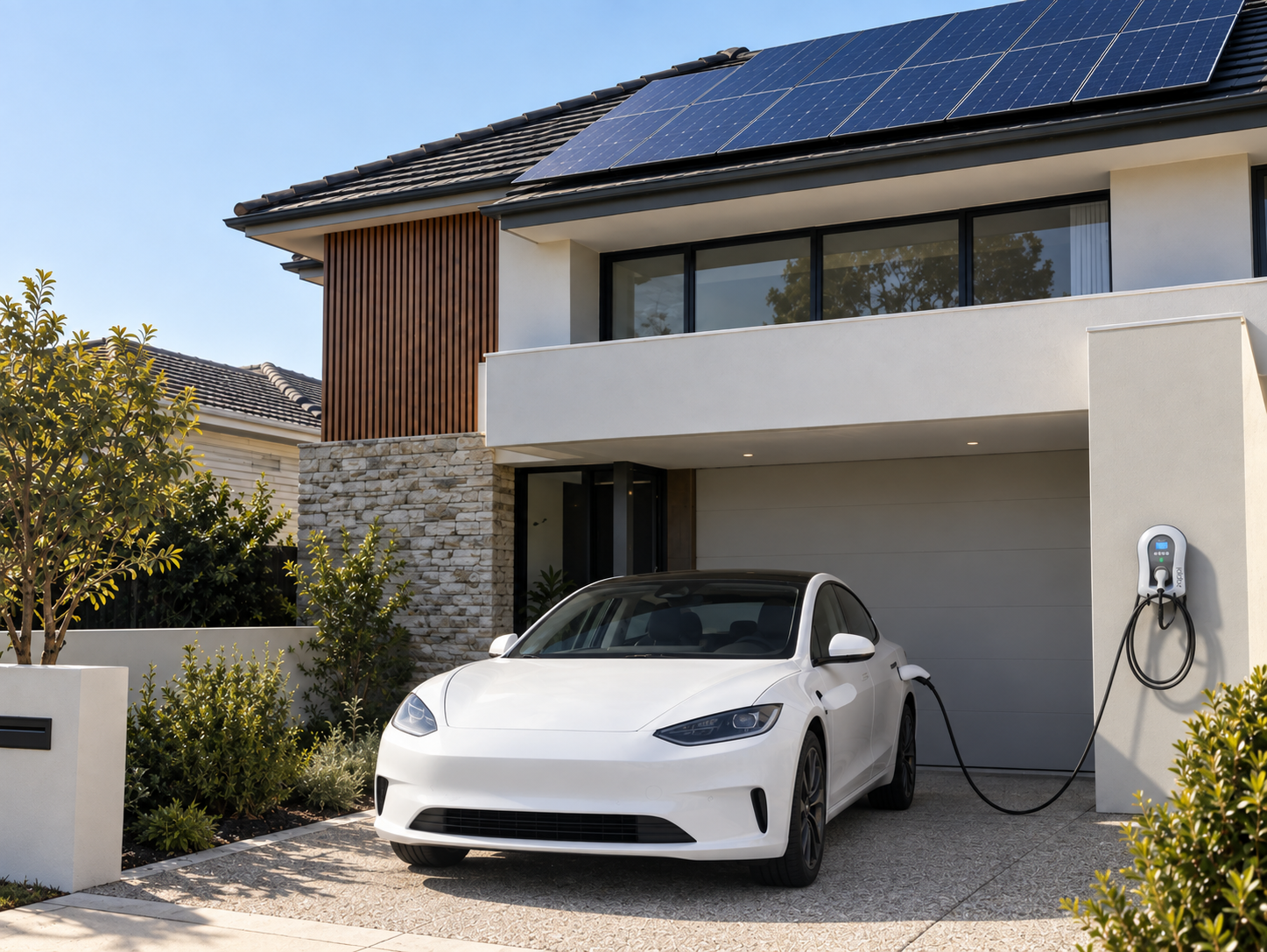
Use more of your own rooftop solar to charge your electric vehicle, reduce reliance on grid electricity and bring your solar, battery and EV charger into one practical energy plan.
A smarter way to charge
Solar-powered EV charging means coordinating your home EV charger with the electricity produced by your rooftop solar system. Instead of exporting every surplus kilowatt-hour or charging mainly from the grid, a compatible charger can direct available solar energy into your car when conditions and your schedule allow. This is commonly called solar-surplus charging.
It is not simply a solar panel connected directly to a vehicle. A well-designed system considers solar production, household demand, charger capacity, vehicle compatibility, tariffs, switchboard capacity and, where relevant, a home battery.
How it works
Your charging strategy is designed around the way the property actually uses energy.
Rooftop panels generate electricity during daylight hours for the property to use.
Your appliances and business loads use the solar energy they need at that moment.
A compatible smart EV charger can increase or reduce charging to follow available solar generation.
Charging can continue when solar is limited, based on the settings and energy strategy selected for the site.
Designed around real usage
An EV can become one of a property’s largest electricity loads. Planning solar and EV charging together helps that new demand work with your energy system instead of against it.
Direct surplus generation into your vehicle instead of relying only on grid charging.
Check switchboard, phase, charger and grid requirements before installation.
Balance daytime solar charging with off-peak rates and stored energy where appropriate.
Consider the likely charging needs of a second EV, fleet growth or a future battery.
Solar-surplus charging options
If your property already uses a GoodWe or Sigenergy inverter and battery system, choosing a compatible EV charger can bring solar, storage and vehicle charging into the same energy ecosystem.
GoodWe ecosystem
A practical solar-smart EV charger option for properties using a compatible GoodWe inverter and battery system. It can be configured to make better use of available rooftop solar while keeping charging controls within the GoodWe ecosystem.
Sigenergy ecosystem
Designed for properties using SigenStor, bringing EV charging together with Sigenergy solar, battery storage and home energy management. This helps the system coordinate vehicle charging with available solar and stored energy.
EcoFlow ecosystem
A strong solar-smart option for homes using EcoFlow PowerOcean or a compatible third-party solar system. PowerPulse 2 does not store solar energy itself: Solar Mode prioritises available rooftop generation for the car, while a separate PowerOcean home battery can store surplus energy for later use.
Charger functions and solar-priority controls depend on the inverter, battery, vehicle, switchboard and site configuration. We confirm compatibility before recommending a system.
Residential and commercial
For homes
We review your driving routine, daytime solar surplus, electricity plan, switchboard and future battery needs to design a home EV charging setup that fits your household.
For businesses
Commercial solar EV charging can support staff, fleet or customer vehicles while making better use of daytime rooftop solar and available site capacity.
Site-verified planning
Free energy assessment
Share your address, recent electricity bill and EV charging needs. We’ll review your usage, solar potential and site requirements, then show you the most practical next step.
FAQ
Solar-surplus charging allows a compatible smart EV charger to adjust its charging rate around the rooftop solar left after the property’s other electricity needs are met. If surplus solar falls below the charger or vehicle’s minimum requirement, charging may pause or use grid or battery energy, depending on the selected settings.
A solar-aware EV charger can adjust charging to use available rooftop solar, but the system still operates through your property’s electrical installation. Actual solar charging depends on generation, household or business demand, vehicle settings and charger compatibility.
Not necessarily. Daytime EV charging can use surplus solar without a battery. A battery may help when the vehicle is usually home after sunset, but it should be assessed against your usage, system size, tariff and budget.
Often, yes. The existing inverter, solar capacity, switchboard and monitoring arrangement need to be reviewed to determine the most suitable charger and control method.
Yes. Workplaces with daytime vehicle activity can align EV charging with commercial solar generation. The design must account for site load, parking use, electrical capacity, access control and possible future fleet growth.
There is no single size for every property. The right solar capacity depends on annual driving, vehicle efficiency, charging times, household or business consumption, roof conditions and how much grid charging you are comfortable using.