
kW vs kWh: The Difference, And Why It Matters When You Buy
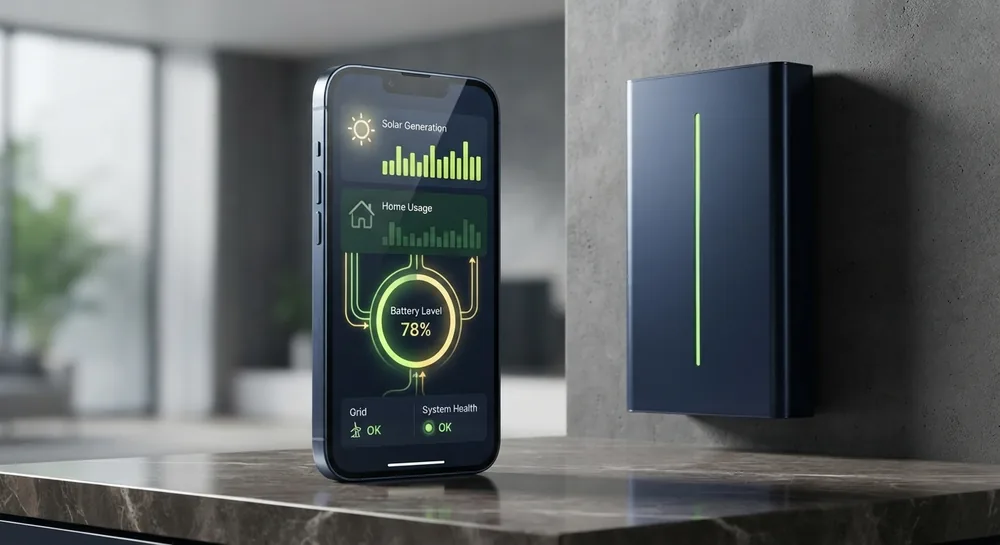
kW measures power, kWh measures energy , confusing them leads to the wrong-sized system. A plain-English guide with everyday analogies and worked examples.
Two units come up constantly when you shop for solar and batteries , kW and kWh , and they're easy to mix up. Getting them straight is the single best way to avoid buying a system that's the wrong size.
kW is a rate. kWh is an amount.
Kilowatts (kW) measure power , how fast energy flows at a given moment. Kilowatt-hours (kWh) measure energy , how much you use or store over time. One kWh is one kilowatt flowing for one hour.
An analogy: think of a tap and a bucket. The kW is how fast the water flows out of the tap. The kWh is how much water ends up in the bucket. A fast tap (high kW) fills the bucket quickly; a big bucket (high kWh) holds more in total. They describe different things.
Or on the road: kW is speed (km/h), kWh is distance (km). Going faster doesn't mean you travel further , that depends on how long you keep going.
Where you'll see each one
- Solar panels & inverter , kW. A "6.6 kW solar system" describes its peak power output in full sun, and the inverter is rated in kW.
- Home battery , both. Capacity is in kWh (how much energy it stores, e.g. 10 kWh), and power output is in kW (how much it can deliver at once, e.g. 5 kW). Both matter , see below.
- Your electricity bill , kWh. You're billed for the energy you use, measured in kWh.
- EV charger , kW. A "7 kW charger" describes charging speed; how much charge the car gains depends on how long it's plugged in (kW × hours = kWh).
A worked example
Say a battery stores 10 kWh and can output 5 kW. If your home draws 2 kW in the evening, the battery could run it for about 5 hours (10 kWh ÷ 2 kW). But if you switch on appliances that together need 6 kW, the battery can't deliver that , its 5 kW output is the ceiling, even though it still has plenty of stored kWh. That's why you check both numbers: capacity (kWh) for how long it lasts, power (kW) for how much it can run at once.
Why this matters when you buy
People often size a battery on capacity (kWh) alone and get caught out by the power rating (kW). If you want to run a lot at once , or back up an all-electric home , you need enough kW as well as enough kWh. Conversely, huge kWh with low kW lasts a long time but can't power heavy loads simultaneously. The right system balances the two around how your household actually uses energy.
How Sunbridge helps
We size solar and battery on both your energy use (kWh) and your peak power needs (kW), reading your bills and usage rather than guessing. Browse home battery systems or request a quote, and for the wiring side see single-phase vs three-phase power.
Thinking about solar, a battery or an EV charger?
Get a tailored quote , we'll design the system around your home, usage and rebates.