GoodWe ESA Review (2026): What We See on Real Installs
The GoodWe ESA one year after its Australian launch: the current range, installed prices, what owners have run into, which problems firmware has fixed, how the warranty works, and how we install it.
We supply and install the GoodWe ESA as an approved GoodWe installer (installer code G10000622), so this review comes from someone who sells it. It covers what the ESA is a year after its Australian launch, what it costs installed, what owners have run into, which of those problems firmware has already fixed, how the warranty works when something fails, and what we do at installation because of it.
It draws on GoodWe’s current Australian datasheets, manuals and warranty terms, the GoodWe quotes we have sent since June 2026, and about 1,800 posts in the GoodWe owner threads on the Whirlpool forums, read in October 2026. Where a point rests on owner reports, we link to the post.
The short verdict
The ESA is strong value. It gives whole-home backup without a separate gateway, a wide range of sizes in single and three phase, and fast charging once its firmware is current. It is also a young product: GoodWe Australia announced it in October 2025, its documents and firmware have changed a lot since, and owners have hit settings problems and a handful of battery modules that failed without warning.
- A good fit if price per kWh matters, you want backup without paying for a separate gateway, or you need a large three-phase system.
- Think twice if you want a long local track record, the inverter would sit on a bedroom wall, or you want a warranty that pays for the technician’s visit (GoodWe’s covers the hardware; labour is at GoodWe’s discretion).
What you get in 2026
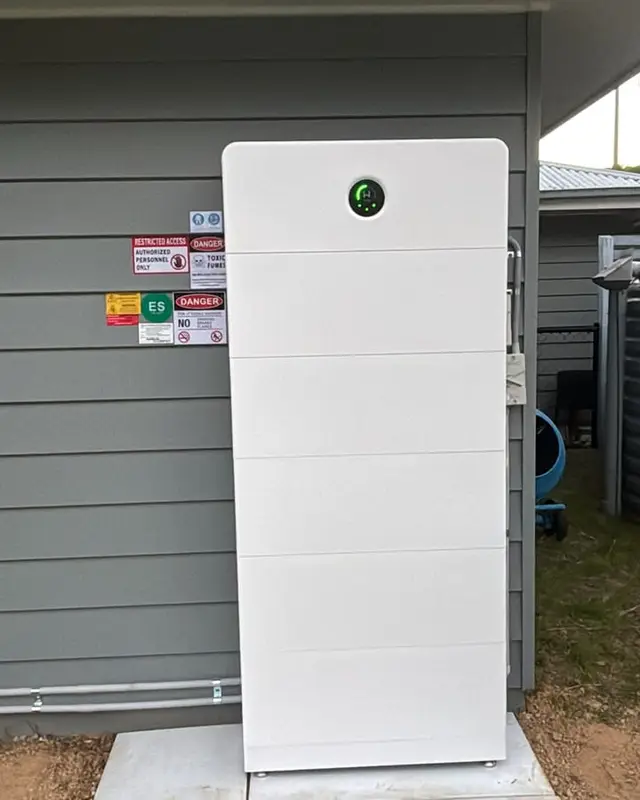
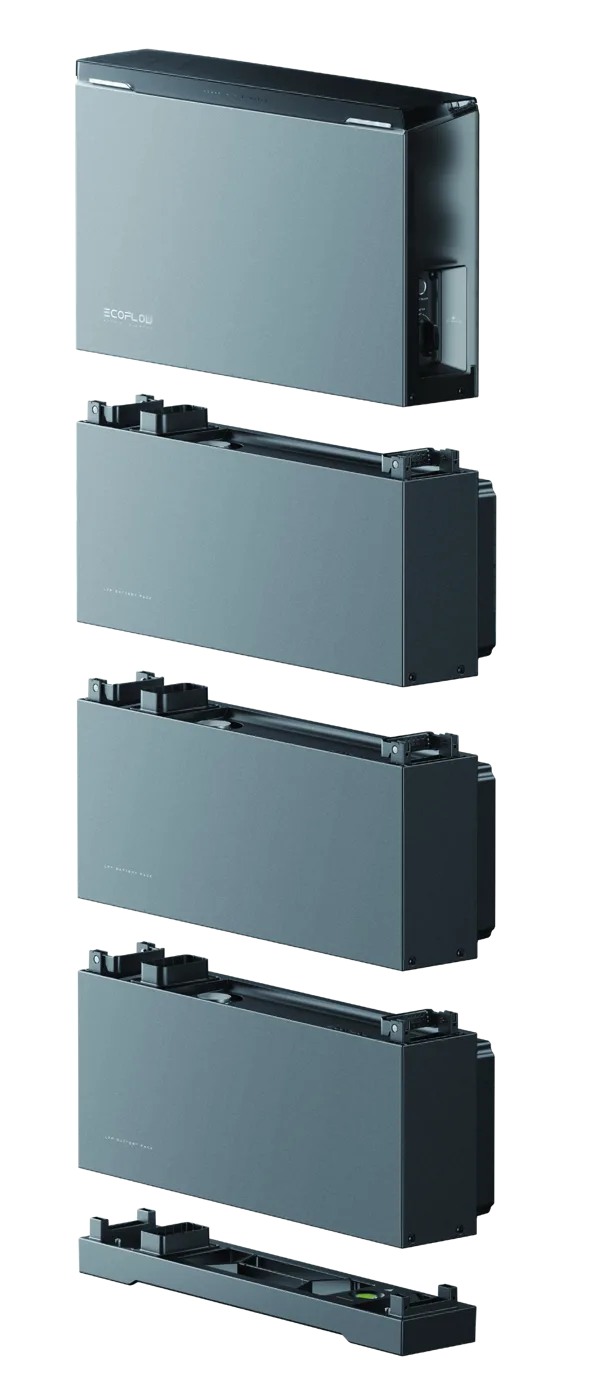
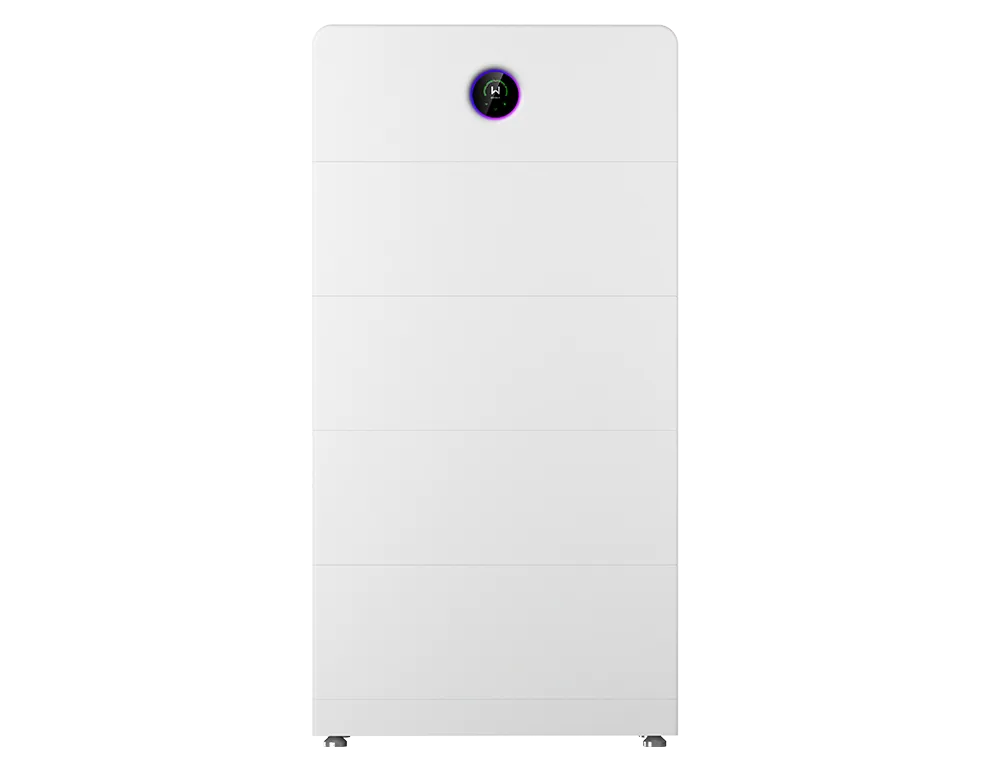
The ESA is an all-in-one stack: a GoodWe hybrid inverter on top, LFP battery modules below. The single-phase inverters run from 3 to 10 kW and the three-phase from 5 to 30 kW. Modules come in four sizes (5.12, 6.0, 8.32 and 9.0 kWh), and one system takes up to 12 modules, or 108 kWh, in up to three groups. A single column holds up to six modules, and only two or three can hang on a wall.
The module size changes more than capacity. The 5.12 and 8.32 kWh modules can each charge or discharge at 5 kW and 8 kW, but the 6.0 and 9.0 kWh modules at only 3 kW and 4.5 kW. So two 9.0 kWh modules can deliver about 9 kW together. GoodWe’s “1C” headline applies to the first pair.
If you read the launch coverage, note what has changed: it described a 48 kWh limit, single phase only and a fanless inverter. The current range goes to 108 kWh, three phase is available, and owners of the 10 kW single-phase model report a fan that can be heard when it works hard.
What a GoodWe ESA costs installed
These are our fixed prices for a standard installation as at 15 October 2026, including GST, after the federal battery discount. The lowest price for each size is shown.
| Battery | Modules | Installed from |
|---|---|---|
| 18 kWh | 2 × 9.0 kWh | $7,566.50 (three phase) or $7,837.93 (single phase) |
| 27 kWh | 3 × 9.0 kWh | $9,432.63 |
| 33.28 kWh | 4 × 8.32 kWh | $11,482.43 |
| 36 kWh | 4 × 9.0 kWh | $11,762.93 |
| 41.6 kWh | 5 × 8.32 kWh | $13,977.43 |
| 45 kWh | 5 × 9.0 kWh | $14,526.43 (single phase) |
| 49.92 kWh | 6 × 8.32 kWh | $16,472.43 |
| 54 kWh | 6 × 9.0 kWh | $17,481.23 (three phase) |
Partial backup adds $500, whole-house backup adds $800 on three phase, and a garage install adds $500 for the bollards and smoke alarm. The GoodWe page lists every package with today’s price and a written quote. The federal discount steps down on 1 January 2027, so these prices will rise for installs from then.
What our GoodWe quotes look like
- 27 kWh is the typical size. It is the median, and half of our GoodWe quotes fall between 20 and 30 kWh.
- Mostly three phase. 57% are for three-phase homes.
- Backup on about half. 46% include backup.
- Garages are common. 29% of GoodWe quotes include a garage install, against about one in five across all brands.
- Many are retrofits. Across all brands, 45% of the batteries we quote are added to an existing solar system.
These come from a few dozen quotes sent since June 2026, so they describe our customers, not the market.
What owners like
- Price for the capacity. Owners comparing quotes often find the ESA several thousand dollars below a Sigenergy of similar size. In one December 2025 comparison, the ESA came in about $5,000 lower for 24 kWh.
- Backup without a gateway. The ESA has a 63 A internal bypass (80 A on the 25 and 30 kW three-phase models), so the whole house can sit on the backup side without extra hardware. In an outage the house is limited to the inverter’s off-grid rating.
- Fast charging once updated. With current firmware, owners report combined solar and grid charging up to 13.5 kW, useful on plans with free midday power.
- Problems fixed quickly. Owners describe GoodWe support pushing firmware on request, and a July 2026 update added export control in time-of-use mode after owner feedback.
What owners have run into, and where each issue stands
Charging capped near 10 kW
Early owners found charging stopped at about 10 kW, not the 13.5 kW on the datasheet. From March 2026 GoodWe pushed firmware that unlocks it, at first only when owners asked with their serial number. Status: fixed by firmware. Charging from the grid alone stays limited to the inverter’s rating.
A bug with kept third-party inverters
Homes that kept an existing solar inverter and AC-coupled it hit a bug in mid-2026. Status: fixed in firmware released in early July 2026, according to a well-informed owner on the GoodWe thread.
A small, constant import from the grid
Owners saw a steady 20 to 300 W drawn from the grid, traced to default import offsets, including a 300 W offset that switched on with the software export limit. It matters on plans that reward zero evening import. Status: settings. The installer or GoodWe support can change the offset.
Battery modules failing without an alarm
Between May and October 2026 at least four owners on Whirlpool reported a module that stopped working with nothing in the app. One owner’s replacement took about 33 days from fault to swap, partly because the delivery was routed through the installer. Because the ESA base is only a year old, we cannot say how common this is. Status: warranty replacement. The module’s power light is the simplest check.
The backup switch
Many installs include a three-position manual transfer switch. Owners found that in the auto-backup position some systems could not charge from the grid at full rate, and a few discovered mislabelled switches or a second stack not wired to backup only when the power went out. Owners also confuse the app’s “Backup” working mode, which only prioritises keeping the battery charged, with backup wiring. Status: an installation issue.
App and account set-up
Several owners were set up as a “visitor” in the SEMS+ app, so tariff and VPP settings were missing until the installer changed their role. Some settings and firmware updates need a local Bluetooth connection through the SolarGo app. Status: improving, but worth checking at handover.
Virtual power plants
Amber’s SmartShift has supported the single-phase ESA since 28 January 2026, but as a limited release with a waitlist and a pre-flight check. Some other VPPs lagged through mid-2026. Check the current status with the VPP before you count on it.
Installation mistakes that look like faults
A long-standing owner on the GoodWe thread sums up the year this way: most problems trace back to installs, such as reversed or misplaced CT clamps, missing backup circuits, mislabelled switches and undersized wiring. In one case the street service fuse blew on the first big grid-charge.
The warranty, in plain terms
- Cover: 10 years on the inverter (limited warranty) and 10 years product and performance cover on the battery. The battery is warranted to keep 70% of its usable energy, or until it has delivered 3.0 MWh per usable kWh, whichever comes first.
- Claim through your installer first, within one month of the fault. You can escalate to GoodWe’s help centre if needed.
- Hardware only, unless agreed. GoodWe covers the parts needed. Transport is covered up to a set amount in some areas, and a labour rebate is at GoodWe’s discretion, approved before the visit. The faulty unit has to be returned within four weeks.
- Not for life support. GoodWe’s battery warranty says the battery is not suitable for life-sustaining medical devices.
Your rights under the Australian Consumer Law apply as well.
What we do at installation because of this
- Check the firmware at commissioning and ask GoodWe for the current release, so charging and AC-coupling behave as they should.
- Set the customer up as the owner in SEMS+, not a visitor.
- Zero the idle import offset and check the first week of retailer data.
- Place the grid CT at the point of entry, fit a second meter for any kept inverter, and confirm the house load reads correctly.
- Label the transfer switch, explain each position, and wire every stack’s backup output.
- Check the service fuse and main switch before promising fast grid charging.
- Keep the single-phase inverter off bedroom walls and give it ventilation.
- Show the owner how to check each module’s power light.
GoodWe or Sigenergy?
On today’s prices a 27 kWh GoodWe ESA is $9,432.63 against $11,721.50 for a 27 kWh Sigenergy SigenStor, and GoodWe’s whole-house backup adds $800 on three phase against $1,981.40 for Sigenergy, which needs its gateway. Sigenergy’s case is its longer backup record, its DC EV charger option, open local data and a warranty that covers labour. Our Sigenergy SigenStor review covers the other side.
Who should choose a GoodWe ESA
Choose it if you want a large battery and backup for the lowest price, or a big three-phase system. Ask your installer how they set up the firmware, app role and transfer switch, because that is where most first-year problems came from. The inspection is where we check the switchboard, the service fuse, the phase and where the stack can go, before you commit.
FAQ
Frequently asked questions
Thinking about solar, a battery or an EV charger?
Get a tailored quote , we'll design the system around your home, usage and rebates.