Home EV Charger FAQ: Solar Charging, Phase, Speed and Modes

Solar-smart charging, single vs three-phase speed, tethered vs untethered, ECO/FAST modes, bidirectional V2H/V2G and whether you need solar at all , the home EV charger questions, answered.
Home EV chargers look similar on the wall but differ in how smart they are about your solar, how fast they charge, and whether they can send power back to your home. This guide answers the common questions across brands , myenergi, Ocular, EcoFlow, GoodWe and Sigenergy. For the bigger picture, read solar-first EV charging at home.
What does "solar-smart" charging actually do?
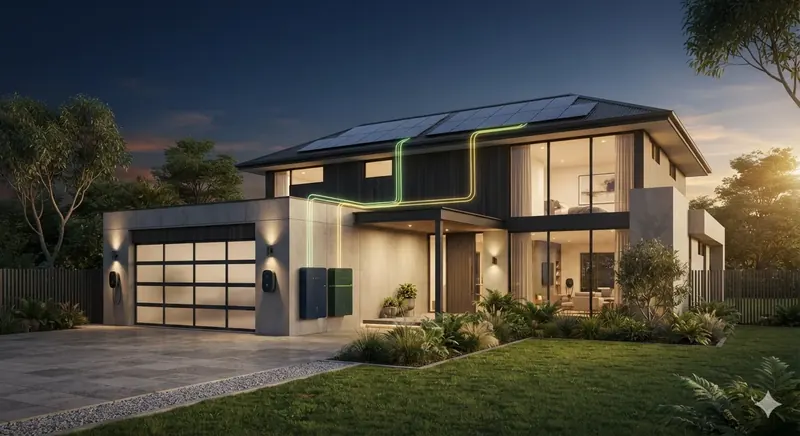
A solar-smart (or PV-surplus) charger watches your home's live import and export and charges the car from the solar you would otherwise export cheaply. On a sunny day that can mean filling the car for little or no cost, instead of exporting at a low feed-in tariff and buying power back later. It does this automatically using current-transformer (CT) sensors at your switchboard.
Do I need solar to use one?
No. Every home charger works as a straightforward fast charger on grid power, and you can schedule it to run on the cheapest overnight rate. Solar simply unlocks the surplus-charging mode. If you have (or plan) solar, a solar-aware charger pays for itself faster.
Single-phase or three-phase , how fast will it charge?
Charging speed is capped by your supply. A single-phase home typically tops out around 7 kW of AC charging; a three-phase supply supports up to about 22 kW, so the car fills in a fraction of the time. Not sure which you have? Our single-phase vs three-phase guide shows how to check. Most homes charge plenty fast overnight on 7 kW regardless.
What is the difference between AC and DC charging?
An AC charger sends alternating current to the car, which the car's onboard charger converts to DC , so speed is limited by that converter (often ~7 kW). A DC charger converts power itself and feeds DC straight to the battery, so it charges much faster and can support advanced features like bidirectional flow. Most homes use AC; DC is for faster or bidirectional setups.
What do V2H and V2G mean?
Some (usually DC) chargers are bidirectional. V2H (Vehicle-to-Home) lets your EV power your house, including as blackout backup. V2G (Vehicle-to-Grid) lets you export to the grid at high-value times for credits. In effect, a bidirectional charger turns your parked EV into a large home battery.
Tethered or untethered , which should I pick?
Tethered chargers have a captive cable , grab and plug in, most convenient for daily home use. Untethered (socketed) chargers need you to bring a cable but keep the unit tidy and future-proof if cars or connectors change. For a single-car household that always parks in the same spot, tethered is usually the easier choice.
What are ECO, ECO+ and FAST modes?
Solar-smart chargers offer charging modes that trade speed for savings: a FAST mode charges at full power regardless of source; an ECO mode blends solar surplus with grid to keep charging steadily; an ECO+ mode uses solar surplus only, pausing when a cloud passes. Pick FAST when you need range now, ECO+ when you want the greenest, cheapest charge.
Can it be installed outdoors?
Yes , home chargers are built for it, typically rated IP65 or better for dust and water, with UV-stable enclosures. Coastal homes should confirm the corrosion rating. Sunbridge installs the unit, wiring and any switchboard work, and designs the setup around your solar, battery and supply. Browse EV chargers or request a quote.
Thinking about solar, a battery or an EV charger?
Get a tailored quote , we'll design the system around your home, usage and rebates.