Up to 25 kW DC fast charging
Available in 12.5 kW and 25 kW versions, adding roughly 150 km of range per hour at full power — far faster than a typical AC home charger.

EV Chargers·Sigenergy
The Sigen EV DC Charging Module is a fast, bidirectional home DC charger that connects your electric vehicle, your solar and your home into one energy system. Unlike a standard AC charger, it converts power itself and feeds DC straight to your car, so it charges much faster — and it can send energy back out again for home backup or grid export.
Available in 12.5 kW and 25 kW versions, it can add roughly 150 km of range per hour at full power, and it charges directly from solar through a DC-coupled architecture so more of your own clean energy reaches the car. It pairs with the Sigenergy SigenStor energy controller as the hub that links your EV, battery, solar and home.
This page explains what the Sigen EV DC Charger is, who it suits, every key specification, what those numbers mean for your home, and the technical terms behind them, so you can decide with confidence before requesting a quote from Sunbridge Energy.
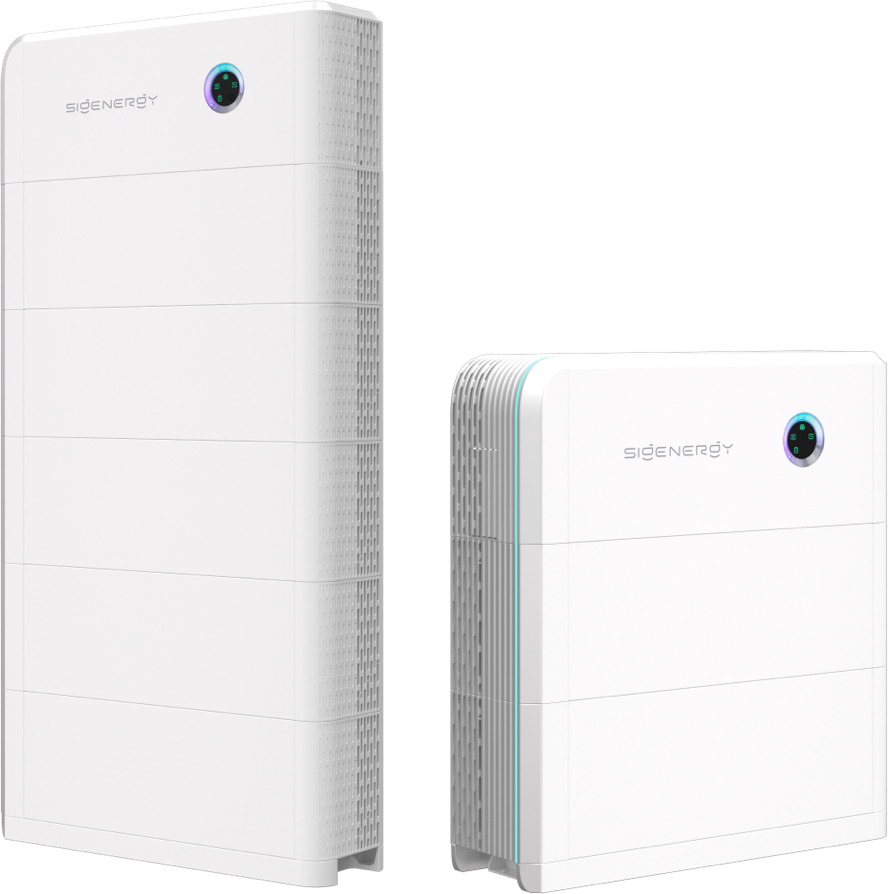
Available in 12.5 kW and 25 kW versions, adding roughly 150 km of range per hour at full power — far faster than a typical AC home charger.
Charges the car and sends energy back out — V2H to power your home (including backup), and V2G to export to the grid for energy trading.
A DC-coupled architecture lets the charger draw directly from solar, grid and battery, so you can fill the car with your own clean energy and cut grid costs.
A 150–1000 V charging range and CCS2 interface make it compatible with most modern electric vehicles sold in Australia.
An IP66-rated, maintenance-free enclosure with smart air cooling, rated from −30 °C to +60 °C and up to 4,000 m altitude.
RFID and app authentication, smart load management and charging reservations, plus OTA updates and remote diagnosis over 4G or Wi-Fi.
Homes with rooftop solar that want to charge the car directly from their own clean energy — and from surplus solar they would otherwise export cheaply.
Drivers who want far faster charging than a typical 7 kW AC charger — up to 25 kW DC, adding around 150 km of range per hour.
Households that want to use the EV’s battery to help power the home during a blackout (V2H), turning the car into a large backup battery.
Homes that want to export stored EV energy to the grid at high-value times (V2G), where energy-trading programs are available.
Households building a Sigenergy system who want a single integrated ecosystem linking solar, battery, EV and home energy management.
Homes needing a weatherproof, IP66-rated charger suitable for outdoor wall mounting in Australian conditions.
Specifications are based on the Sigen EV DC Charging Module datasheet (12.5 / 25 kW). Exact figures depend on the chosen version; Sunbridge will confirm the right setup for your home.
DC charging feeds power straight to the car’s battery, bypassing the car’s slower onboard AC converter. At 25 kW that is roughly 150 km of range per hour — a typical 7 kW AC charger adds closer to 40 km.
The charger moves energy both ways. V2H lets your car power your home — useful as backup during an outage — and V2G lets you export to the grid at high-value times to earn credits.
Charging on the DC side avoids the DC→AC→DC conversion losses of an ordinary setup, so more of your solar actually reaches the car instead of being lost as heat.
The wide voltage window and CCS2 connector mean the charger works with the great majority of EVs sold in Australia, including both 400 V and 800 V vehicles.
Rated for full outdoor installation — dust-tight and protected against powerful water jets — and built to keep working through Australian heat and cold.
Most home chargers are AC units limited by the car’s onboard converter, typically around 7 kW. The Sigen EV DC Charger converts power itself and feeds DC straight to the battery, delivering up to 25 kW — roughly 150 km of range per hour. Its DC-coupled design draws directly from your solar, battery and the grid, so you can charge with your own clean energy and avoid conversion losses.
Smart features like PV-surplus charging, load management and charging reservations let you charge at the cheapest, greenest times automatically.
Because it is bidirectional, the charger turns your EV into a large energy resource. With V2H, the car can help power your home — including as backup during a blackout — and with V2G it can export energy to the grid at high-value times for potential credits through energy-trading programs.
The module works as part of the Sigenergy ecosystem, pairing with the SigenStor energy controller that links your solar, battery, EV and home energy management into one system.
The charger uses an IP66-rated, maintenance-free enclosure with smart air cooling, rated from −30 °C to +60 °C and up to 4,000 m altitude, so it is suited to outdoor installation across Australian conditions.
It supports RFID, app and automatic authentication, with OTA updates and remote diagnosis over 4G or Wi-Fi, and is backed by a 10-year warranty.
Shopping for a home battery means wading through technical jargon. Here is what the most important terms on this page actually mean.
AC chargers send alternating current to the car, which its onboard charger converts to DC — limiting speed to that converter. A DC charger converts power itself and feeds DC straight to the battery, so it can charge much faster.
A charger’s power in kilowatts sets how fast it adds range. Roughly, a 25 kW DC charger can add around 150 km of range per hour, far quicker than a typical 7 kW home AC charger.
A charger that can move energy both ways — into the car to charge it, and out of the car to power other things. It turns your EV battery into an energy resource for your home or the grid.
Using your EV’s battery to power your home — for example as backup during a blackout, or to run the house in the evening from energy stored in the car.
Exporting energy from your EV back to the grid at high-value times, potentially earning credits or payments through energy-trading programs.
Combined Charging System 2 — the standard DC fast-charging connector used by most EVs sold in Australia and Europe.
Charging the car directly from solar (and battery) on the DC side, avoiding the conversion losses of going DC→AC→DC — so more of your solar reaches the car.
Automatically using only your excess (surplus) solar — the energy you would otherwise export cheaply — to charge the EV, maximising self-consumption.
How many kilometres of driving range a charger adds in an hour. It depends on the charger’s power and the car’s efficiency.
An Ingress Protection rating. The first digit is dust protection (6 = dust-tight), the second is water protection. An IP66 unit can be installed outdoors.
Sunbridge designs every Sigen EV DC Charger installation around your home and your solar, so the charger works with your existing or planned system. Because the module pairs with the Sigenergy SigenStor energy controller, we plan the full setup — solar, battery, EV charging and energy management — together.
Installation is carried out by accredited installers to Australian standards, including switchboard and load configuration, commissioning and testing, and a full handover so you know how to use the Sigenergy app. We also provide ongoing support for the life of the system.
The Sigen EV DC Charger is backed by a 10-year manufacturer’s warranty covering manufacturing defects and performance retention under normal residential and commercial use.
This is the manufacturer’s term; your guarantees under the Australian Consumer Law apply in addition. Sunbridge confirms the current warranty terms for your configuration and registers the warranty on your behalf as part of the installation.
It is available in 12.5 kW and 25 kW versions. At 25 kW it adds roughly 150 km of range per hour — far faster than a typical 7 kW AC home charger.
The charger can move energy both ways. V2H lets your EV power your home, including as backup during an outage; V2G lets you export energy to the grid at high-value times to earn credits.
Yes. Its DC-coupled design draws directly from your solar, battery and grid, so you can charge with 100% solar power and use surplus solar that would otherwise be exported.
It has a wide 150–1000 V charging range and a CCS2 interface, making it compatible with most modern electric vehicles sold in Australia, including 400 V and 800 V cars.
Yes. The Sigen EV DC Charging Module is used together with the Sigenergy SigenStor energy controller, which links your solar, battery, EV and home. Sunbridge can design and install the complete system.
Yes. It is rated IP66 — dust-tight and protected against powerful water jets — with smart air cooling and a −30 °C to +60 °C operating range, so it suits outdoor installation in Australian conditions.
A 10-year manufacturer’s warranty covering defects and performance retention. Australian Consumer Law guarantees also apply.
Talk to Sunbridge Energy about design, installation and a quote tailored to your home.